Melody Module: What Will You Come Away With?

By the end of the Melody Module, what will you come away with?

  • You will see Melody in a fresh way…
  • We’ll begin to de-mystify Melody via the concept of Scale Degrees
  • You’ll be introduced to the ultimate codebreaker for Melody, The Major Scale
  • You will make your way towards a more finely tuned sense of relative pitch
  • You will learn how musicians approach playing by ear
  • You’ll be given a clear way to process real-world melodies
  • You’ll discern what’s been holding you back.
  • You will have a clear picture of the ultimate goal of Ear-Training
  • And lastly, you will learn to make songs your teachers.

Perhaps best of all, I’ll be taking your suggestions on where the series should go next. With your input and my love of being thorough and my obsession to share every musical insight in my brain, I think we can go pretty far.

Are. you. ready?

Pre-order the Melody Module today for $99.

You’ll receive:

  • Life access to all ten Melody Module Episodes
  • Topics include everything listed above
  • Innovative Music Theory Aids
  • Challenging Ear-Training Exercises
  • 100% satisfaction guarantee. If you aren’t fully satisfied, you can get a full refund.

You can also purchase all three modules in a bundle (Melody, Harmony, and Rhythm) now. These three subjects form the foundation of musicianship, and the rest of The WARRENMUSIC Series.

Order Melody, Harmony, and Rhythm Modules together, and receive the above PLUS the following:

  • Unrestricted access to TEN Harmony and TEN Rhythm* Episodes.
  • Topics will include how to identify different types of chords, and entire chord progressions, rhythmic structures, syncopation, and much more… all by ear.

Looking to the future, topics will include improvisation, modes and scales, modulation, alternate tunings, fretboard exercises, phrasing techniques, chromatic harmony, chord substitution, altered chords, poly-rhythm, hidden syncopation, and the list goes on and on!

Pre-order now.


*Rhythm Module is available as a pre-order. Melody and Harmony are available for access today.

  • Skills you can use to work out real world melodies by ear
  • Working knowledge of the Major Scale via popular songs, fun demonstrations, and digestible music theory breakdowns
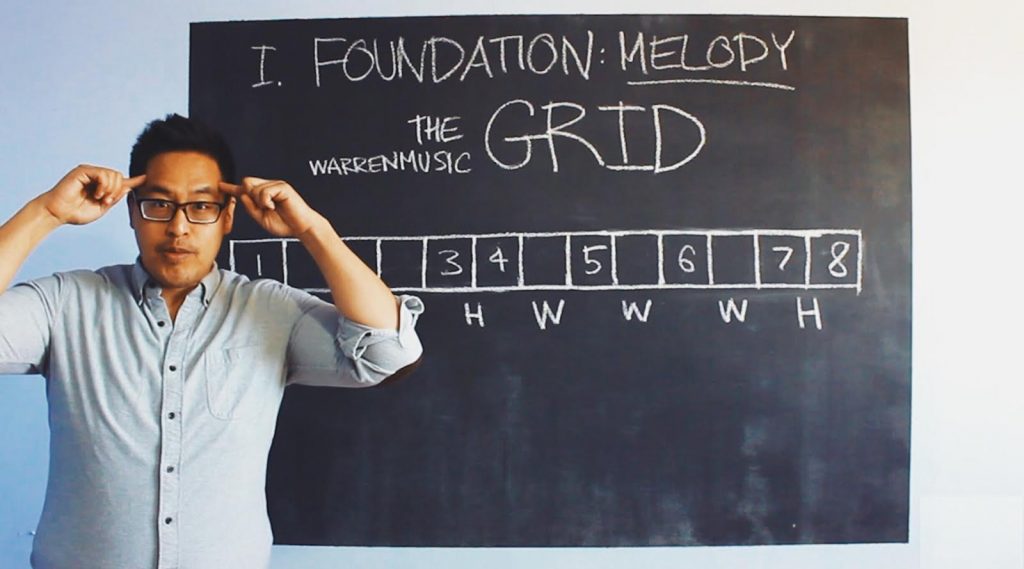
  • Introduction to Scale Degrees and The WARRENMUSIC Grid**
  • 10 in-depth episodes ranging from 10-40 minutes in length
  • Lifetime access
  • Visual Aids
  • Audio Examples
  • Worksheets (Song Puzzles)
  • Interactive Tools
  • Access to Members-Only Melody Module Forum
  • Direct help from fellow learners and Warren
  • Lifetime access to Melody, Harmony, and Rhythm Modules (Rhythm pre-order, TBA 2020)
  • Skills you can use to work out real world melodies, chords and chord progressions, and real world rhythmic patterns by ear
  • Working knowledge of the Major Scale, Diatonic Harmony, Meter, Syncopation, Swing/Shuffle, and much more via popular songs, fun demonstrations, and digestible music theory breakdowns
  • Introduction to Scale Degrees, Chord Numerals, the Time Unit Box System, and The Complete WARRENMUSIC Grid**
  • 30 in-depth episodes ranging from 10-40 minutes in length
  • Visual Aids
  • Audio Examples
  • Worksheets (Song Puzzles)
  • Interactive Tools
  • Access to Members-Only Melody, Harmony, and Rhythm Module Forums
  • Direct help from fellow learners and Warren

When the Tutorial Fades Away, Hear This

Let’s talk about your musical goals.

Everyone desires something from their musical journey.

Many of you started your musical journey by learning your favorite songs. But as you continued to progress in your skills, you began to realize you wanted more: to write your own songs, to write better songs, to improvise, or to gain more insight into the music you love, or play by ear. Some of you want to become a better bandmate, and to be more musically fluent and aware of what’s going on during band practice. Some of you want to make music more freely, jumping from musical idea to musical idea, eliciting and expressing emotion sonically, with conviction and intensity.

All of these are GREAT GOALS!

But allow me to be very direct for a moment.

The hard truth is that none of the above will happen for you if where you turn to first is a tab, a tutorial, or song-by-song lessons from a private teacher. It won’t even happen for you if you understand some things about music, but don’t have an ear for Melody, Harmony, and Rhythm to pick up on the things you’re hearing in your favorite music. It definitely won’t happen if you have an ear for Melody, Harmony, and Rhythm, but lack the musical insight to process any of it or make something new.

If any of the above describes you, it simply WON’T happen for you, unless you make a change.

The main problem with learning music today isn’t that there aren’t enough tabs, tutorials, or teachers. In fact, there are tons. And tons of great ones. I know this firsthand. I make tutorials, after all!

The problem is hoping that tabs and tutorials can do anything more than teach you single songs. They can’t. Or the problem is finding a great teacher who is affordable. Good luck…

Ask a tab to do more than teach you that one song. It can’t. Ask a tutorial to show you how to improvise the way the artist does, to play the song differently every time while retaining its essence, or give you general insights into songwriting, or how the song relates to other songs like it, or how to make the ideas in the song your own. Odds are, it can’t.

Most private music teachers would probably LOVE it if you ask them the about deeper stuff like music theory, ear-training, how to think about and how to approach music the way musicians do, how to communicate better with your bandmates, how to create new arrangements of existing songs, how to find inspiration to write music. But few of these teachers would be very affordable. I also know this firsthand.

But there’s another way: Invest in yourself.

Invest in building your own musicianship. Not in more tabs and tutorials. But in yourself.

And be smart about how you invest. If you can, sign up with a great teacher at the best value you can possibly find.

Musicians can play by ear, compose, improvise, write inspired songs, and find ways to continually grow because they did one thing above all: they prioritized the development of their own musicianship.

Start building the bridge between the music you LOVE and the music you want to MAKE.

The WARRENMUSIC Series will give you the tools you need to grow your musicianship, to train your own ear, and build your own understanding of music. Invest in yourself today.

Pre-order the Melody, Harmony, and Rhythm Modules together at a discount*.

Get ready to UNLEASH the musicianship within!

*Rhythm Module is available as a pre-order. Melody and Harmony are available for access today.

The End Of the Beginning

WARRENMUSIC Intro Module, Episode 07 — “The End Of the Beginning”

Watch Episode 7, “The End Of the Beginning”.

The seventh and FINAL installment of this introductory series is called “The End Of the Beginning,” for two reasons.

1) It’s the last video in this introductory series. Duh.
2) It’s the end for your “beginning” phase of musicianship.

That’s right.

Because beginners don’t stay beginners long when they seek out musicianship.

When you unlock the musicianship you have within, YOU CAN’T stay the same.

It’s just impossible.

When you develop your ear and your understanding of music, the GAP between the music you love and the music you make starts to disappear.

YOU CAN grow your musicianship.

YOU CAN bridge the GAP.

Now it’s time to take that step. It’s time to usher in a BETTER WAY to learn music.

IT’S TIME TO LISTEN AND THINK THE WAY MUSICIANS DO.

Pre-order Today.

Pre-order the WARRENMUSIC Series now!

The Sidewalk Test, Revisited

WARRENMUSIC Intro Module, Episode 06 — “The Sidewalk Test”

If you recall Episode 6, which was first published back in July of 2015, it introduces what I call “The Sidewalk Test.”

In this video, I demonstrate how I play by ear, how I pull the melody, the harmony, and the rhythm out of a song… on the spot.

So what is “The Sidewalk Test,” exactly?

The Sidewalk Test is two simple things:

1) Identify the melody, harmony, and rhythm of a song without outside help
2) Reproduce it ON THE SPOT.

You pass the test if a stranger who knows the song walking down the street would recognize it as they pass by.

Would you pass the test?

If not, then today you can do something about it. You can invest in your own musicianship. Learn music theory. Develop your ear. Build up what is worth more than all the tabs, tutorials, and sheet music in the world.

You can pre-order the Melody, Harmony, and Rhythm modules now.

And until then, watch a new cut of Episode 6, now live.

What Are You Hearing? (The Core Of a Song)

WARRENMUSIC Intro Module, Episode 05— “What Are You Hearing? (The Core Of a Song)”

Episode 5 of The WARRENMUSIC Series is now live! It’s titled, “What Are You Hearing? (The Core Of a Song).”

This video asks the question that snaps everything into focus. Watch as I explain the difference between how casual listeners hear music, and how musicians listen to music, and talk about what three things lie at the musical core of a song.

There is so much going on in the music we love that it is easy to get overwhelmed by all the details. No wonder so many of us turn to tabs, tutorials, and other forms of pre-packaged music information to sort it all out for us. But the problem of outsourcing listening and thinking about music for ourselves is clear: we become dependent on something outside of us, and we rarely connect with anything beyond the single song or musical passage the tab or tutorial is teaching us. But fear not: when we learn about and listen to the Melody, Harmony, and Rhythm of a song, we gain the essentials that translate directly to music making.

There will always be free educational content on warrenmusic.xyz. But for those who wish to challenge themselves in greater ways, premium content is now available in the form of in-depth modules, visual theory aids, and ear-training exercises using a wide range of musical examples. And with that said, you can pre-order now. Watch this blog for more updates and follow me on Facebook/Twitter/Instagram.

As always, I strive to add value to your musical journey. My sincere hope is that what I am putting out there sparks something in you. Drop me a note, comment, email, and share your stories with me… I’d love to hear how musicianship has changed your musical life!

The Trajectory Of the WARRENMUSIC Series

WARRENMUSIC Series Intro Module, Episode 04 — “The Trajectory Of the WARRENMUSIC Series”

Wow, we’re buzzing ahead, now three videos in. The fourth episode is now live!

Where does this series begin? How will the course content be structured? What about really strange, creative music? Will we talk about that?

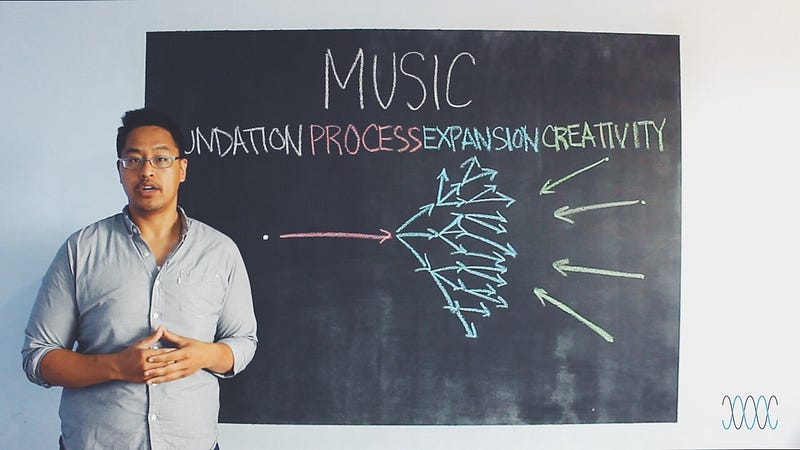
In Episode 4, “The Trajectory Of the WARRENMUSIC Series,” I walk you through a visual representation of what it will look like to come along for this musicianship ride…

The vision of WARRENMUSIC, through my covers and tutorials, chord charts, and now this video series has been and always strives to be simple: to help people get more out of the music they love. This website represents the latest and greatest attempt, by providing an approach to music that helps connect the gap we all experience between the music we love and the music we make through music theory, and ear-training. In the near future, we hope to bring you an amazing ear-training and theory app to help you develop your musicianship like never before.

And here in the WARRENMUSIC Blog, it’ll be similar. I’ll be posting useful resources I find for the benefit of your ear and your insight.

All the best,
Warren

The Power Of Musicianship

WARRENMUSIC Intro Module, Episode 03 — “The Power Of Musicianship”

Episode 3, titled “The Power Of Musicianship,” is now live.

What does musicianship actually look like?

Musicianship is the difference between just regurgitating someone else’s pre-packaged instructions and making the music you love your own. It’s the difference between just following a tab or a tutorial and using your own ear and musical insight. It’s the difference between faking it and thinking/behaving the way musicians do.

In this video, I take you through a few examples of what musicianship looks like in the real world. My hope is that you’ll be inspired to go beyond tabs and tutorials, and seek out, no, DEMAND a more substantial connection between the music you love and the music you want to make.

See what musicianship can do for you! And while you’re at it, catch a snippet of a previously unreleased song from my forthcoming album…

Introduction To the Bridge

Watch Episode 2 of The WARRENMUSIC Series now:


If you recall our first video, we talked about the GAP that exists between the music we love, and the music we make. This video speaks to the BRIDGE between those two things: Music Theory, and Ear-Training.

Quickly defined, Music Theory is a language that describes the connections, patterns, ideas, and larger concepts in music across songs, albums, artists, and genres. And Ear-Training is pretty self-explanatory: it’s getting our ear to the place where we can identify what’s going on in the music we love.

When we combine the two, there is an explosion we call musicianship!

Stay tuned. We’ll soon explore exactly what MUSICIANSHIP can do for you.

Enjoy!

What Am I Hearing?

As we lay the first bricks of our musicianship foundation, one question helps us get a sense of where to begin; it snaps everything into focus.

What am I hearing?

Believe it or not, your answer to this question will reveal a lot about where you are in your approach to a number of musical situations. If your answer to this question is clear and confident, you will be clear and confident in your approach to music. And the opposite is also true. If your answer to this question is hazy, lacking in concreteness, well… your answers about music will feel vague, and your foundation will be full of soft spots, unable to support the musical tasks we want to perform on top.

Think of one of your favorite songs, or a recent song with which you’ve become obsessed. How would you usually approach learning this song?

Most of us would hope to find a tab, a tutorial, or some sheet music that could instruct us in the way of the song. But despite the convenience and accessibility of these resources, all of them fall short of a better goal (assuming the tabs, tutorials, and sheet music are at all accurate). Like trying to learn a language from a textbook, figuring out what to do musically from a set of visual cues sets earnest learners up for massive disappointment. And yet so many have settled for less this way, frustrated, stagnated in their musical journey.

When we are conditioned to perpetually look outside for help, we fail to look within to ourselves, to our ears and to our understanding of the songs we love.

If we are going to have any hope of becoming musically mature, the real goal must not be to reach for these quick fixes, but to do the hard work of developing our musical selves.

It might feel uncomfortable, even backwards, to listen and think first. But the truth is that these visual aids we’re accustomed to are crutches. Crutches are fine when you’re injured, but continuing to use crutches keeps you from developing your otherwise healthy musical legs towards running. A finely tuned sense of what’s happening in music is worth more than all of the tabs and tutorials in the world.

So let’s answer a more challenging question: “How would a musician approach learning this song?”

Would they rely wholly on a tab or a tutorial? Absolutely not! So what would a musician do differently? They would listen and think about what they’re hearing! And, in doing so, they ultimately get more out of the song.

Here, I would offer, are some questions a musician might ask themselves in this situation:

  • What are the different parts of this song?
  • What exactly is happening in this song? How would I describe it?

And more specifically,

  • What is happening in the melody?
  • What is happening in the harmony?
  • What is happening in the rhythm?

And ultimately,

  • Can I apply what I’m hearing to my instrument?

As you can hopefully now see, “What am I hearing?” is a question that cuts to the heart of it. It gets at the core of what we want out of our musical journey. And the amount of confidence in your approach to making music will always reflect your grasp of what is happening in the music you hear.

So, what are you hearing…?