The Bei Area

FIRST PUBLIC PERFORMANCE of a Fully Live Electronic Set

In 2020, I began a journey with a discontinued drum machine, the Elektron MachineDrum. Four years later, I added the Monomachine, its six-voice tabletop synth twin.

At first, the idea behind dipping a toe into the world of these devices was to use them as studio pieces, sound modules where I could design sounds to be used in my forthcoming debut album. But over time, through making the album and studying how other artists used these machines, I was inspired to go deeper. I wanted to learn how to use them in a way they were clearly designed to be used, as instruments capable of live performance in themselves.

The Elektron MachineDrum and Monomachine are digital, distinctive, and deep. They are capable of a variety of synthesis techniques (subtractive, FM, wavetable, and formant synthesis), complex modulation, step-locked parameter changes, automation, mutes, global effects, all of which can be saved as machine states called “patterns.” These patterns can be prepared and loaded for live performance, chained together, and further manipulated to create truly live performances that can never be repeated the same way again.

To this duo, I added an another monophonic synthesizer capable of producing basses, leads, arpeggios, and other sound effects–Superlative SB01–a modern clone of a classic synth used by Radiohead, Boards of Canada, and other notable artists.

What all this means for those of you who know me primarily as a guitarist is that I’m using these machines as if I’m conducting a robot orchestra that moves through multiple acts/scenes, harnessing both randomness and intention in precise ways.

While this set represents a culmination of six years and hundreds of hours of study, more importantly, it marks a new chapter in my musical journey. This small tented show at a local street festival in Downtown San Jose was an important proving ground for me as an artist and a return to live performance after a long hiatus of 16 years.

For the technically curious: In this setup, KeyStep 37 is sequencing SB01 is routed to play through the Monomachine, which adds its own voices and processing (LFO-controlled delay and filter). From there, Monomachine is routed to play through two tracks on MachineDrum, as well as via its live resampling engine which listens to a mix of everything and is capable of playing back mangled, glitchy, and repitched grains of sound that the resampling engine captures. Between the three instruments, nothing is synced via MIDI clock, freeing the SB01 up to play some of its sequences/arpeggios in free time.

Thank you to Steve Cooley and the volunteers of South Bay Sonic Circuits for helping make this event happen. And thank you to all who made it to the end. 

Follow my debut album progress and electronic musings @thebeiarea
Learn more about my musical projects and services.

Thanks for sticking with me.

I'm back with another video.

Thanks for sticking with me. I’m sharing what I’ve been up to, and my most ambitious cover to date.

If you were wondering where I’ve been, I’ve been busy…

Over the past six months, whenever I found time between a house remodel, a burglary, and three moves, I was plugging away at this cover.

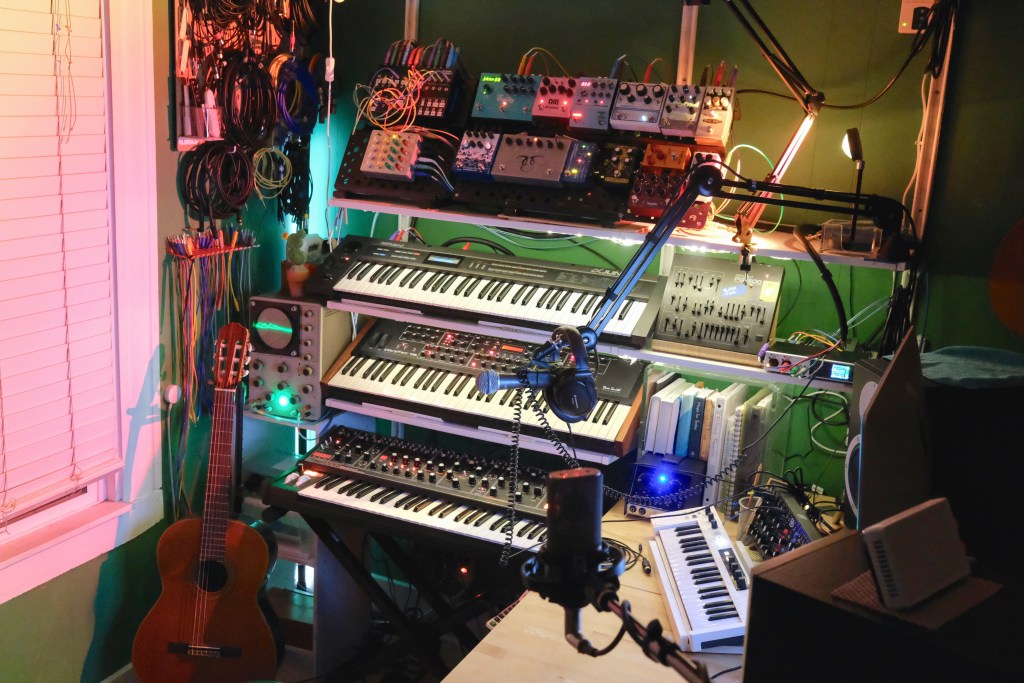
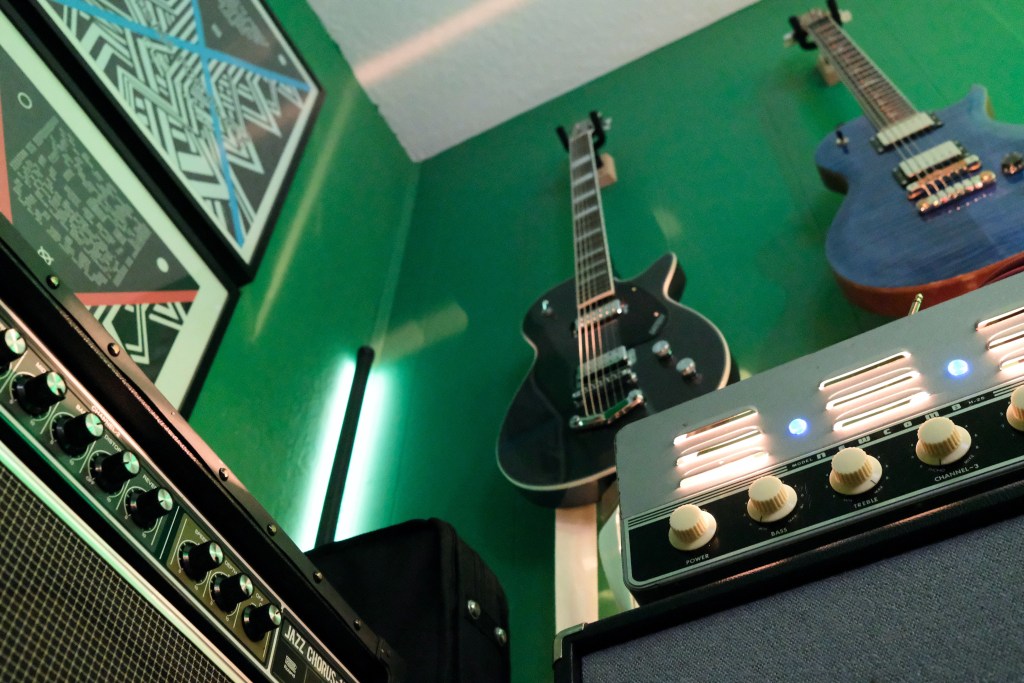
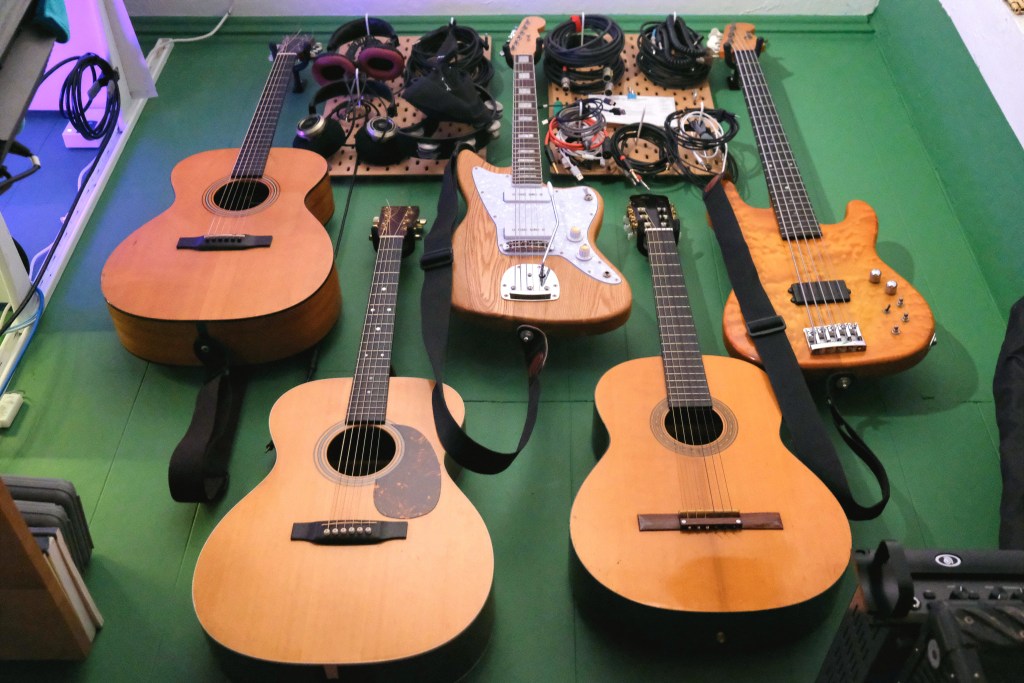
The goal here was to make the limited time I had in this space count. This beautiful home studio my wife encouraged me to create for myself in our house had to come down for a big remodel. But now I’m back online, eager to share what I’ve been cooking up.

Warren going Electronic?!

Since just before the pandemic, I began teaching myself synthesis, the basics of MIDI, and programming electronic instruments. I’ve taken on the mighty task of learning a few new instruments in a few short years.

I’ve been guilty of binging on geartube like everyone else… but slowly collected some instruments that spoke to me, moved on from the ones that didn’t, and started to learn how to wire them all up with my pedals in hopes of finding a whole new sound.

By 2022, I believed I’d found something. I reached out to a professional mixing engineer and producer in hopes of getting my debut album over the finish line… it’s been way too long (some of these songs are as old as 2010). I’m now nine songs in.

Through learning these instruments, a door to a whole new intimidating but thrilling experience has opened. I’m talking about the portal to a liminal space… one where where electronic music lives with acoustic instruments. Sometimes awkwardly, sometimes in pure sonic bliss.

This should be no surprise to any who have followed my journey that I’ve chased after artists like Thom Yorke, James Blake, Bon Iver, and Jai Paul for years. And every new artist I fall in love with has usually found a way to blend the synthetic with the organic. They’ve coaxed the spirit from the machine.

What genre is it? I never know how to answer this question.

And I’m still learning. But at this point, I wanted to give you a glimpse of what the madness has brought forth thus far. And humbly, I present a tribute to one of my favorite new songs (three albums ago already!) from The Smile, “A Hairdyer.”

(While the original features incredible drumming from Tom Skinner, I felt it would be better if I made it my own rather than attempt a mediocre rendition of it with my much slower drumming chops. As I sat down to record the various parts, the cover took on a life of its own. I hope that comes through.)

Until my debut albu, this is something I couldn’t be more proud to share with you all.

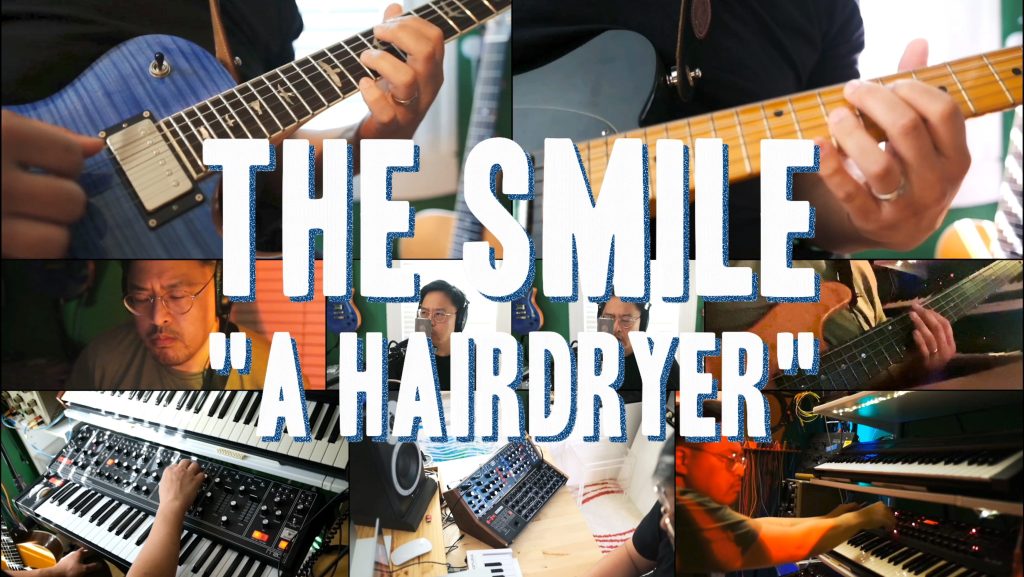
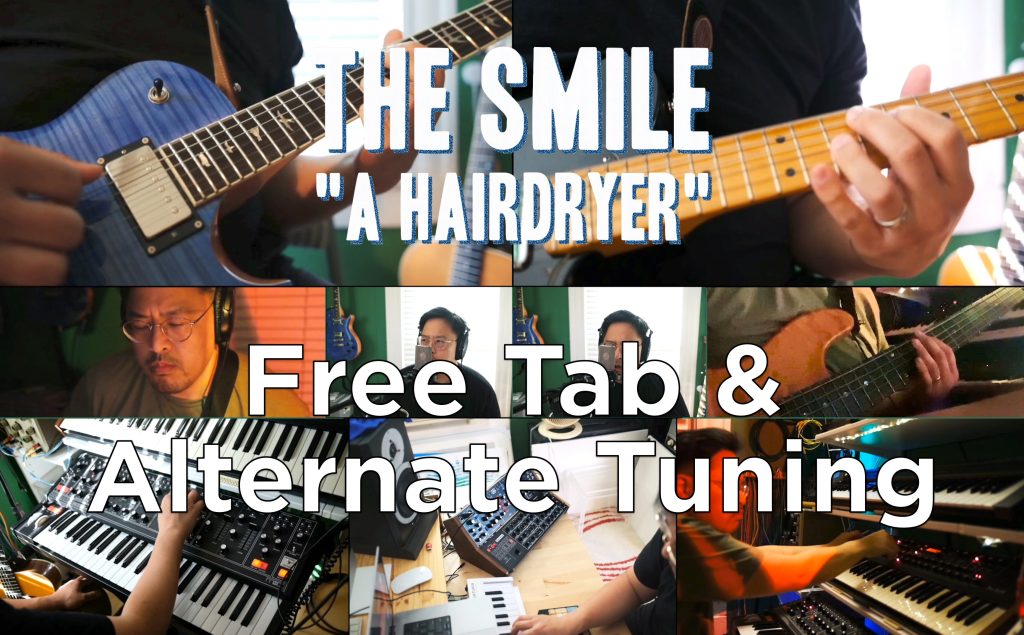
The Smile - “A Hairdryer”

Recording two detuned guitars, electric bass, four vocal tracks, learning the lyrics, a dreamy Prophet pad, some gnarly bass and arps from the Matriarch and Model D, sppoky ambient effects from the pedalboard, and a video montage was a lot of work… but I figured it would be a pretty good excuse to be back in your inboxes/notifications, yeah?

Learn more about my services.

From one on one instruction to chord charts, from music direction to note-for-note playable MIDI transcriptions to music direction, let’s find a way to work together.

Real People, Real Results.

I have helped countless musicians through my YouTube channel, where my videos are known for their fidelity to the source material, and their concise, smart arrangements. But I’m even better one on one!

If you’re looking for help breaking down an intimidating music project, I can be your musical swiss army knife.

But don’t take my word for it. Hear from my current and former clients who took the leap.

Connect with others.

If you are interested in joining a small but growing community of songwriters and bedroom producers, we’d love to have you!

My Journey to the Foundation Modules

The WARRENMUSIC Series is launched.

My origin story

My first musical memory came in pre-school. I was three years old. There was a piano in the hallway, and someone was playing it. Between activities, I wandered through the hall and found myself standing there, mouth open, totally enthralled. My tiny brain tingled with fascination and wonder. The music had power over me. I eventually begged my parents for piano lessons. And at six years old, these lessons were the beginning of my identity as a music maker.

But there were twists and turns in the journey: I struggled with sight-reading sheet music. Teachers would stress the importance of it over my ear, and I eventually quit piano.

My parents then enrolled me in a choir where I was exposed to four-part harmony and opera. But I only had so much of an appetite for the classical music of Western Europe. When it came to the academic canon of what constituted Music, I noticed a growing disconnect between me and the music I was learning as teachers the class on the Mozart/Bach/Beethoven path.

Other genres caught my ears: I took a year of jazz drum lessons, and started to teach myself folk guitar and gospel bass. I joined a gospel choir in college, and got re-acquainted with piano, trying my best to emulate various musical idols along the way.

But I was thankful for my institutionally-acquired skills: I was taught to count and clap, and introduced to solfège. Both skills, especially in conjunction, enabled me to follow the music I actually wanted to learn more closely. I also eventually came to see these fundamental listening skills–also known as beat awareness and relative pitch–had become the engine behind my becoming self-taught.I could predict what sounds would come from the frets and strings of a guitar before I played them. I could visualize the patterns in the drum grooves I wanted to replicate.

I still felt safer playing the music of others but upon discovering more “alternative” or “indie” music, especially a small band out of Oxford called Radiohead, and I was finally motivated to come out of my fearful shell. And so I started a band, and began making covers and tutorials on YouTube.

People got something out of my tutorials, and I was beginning to operate out of a place of deep conviction: “If I can do it, then so can others!”

OLYMPUS DIGITAL CAMERA

YouTube: 2007

Look at that hair...

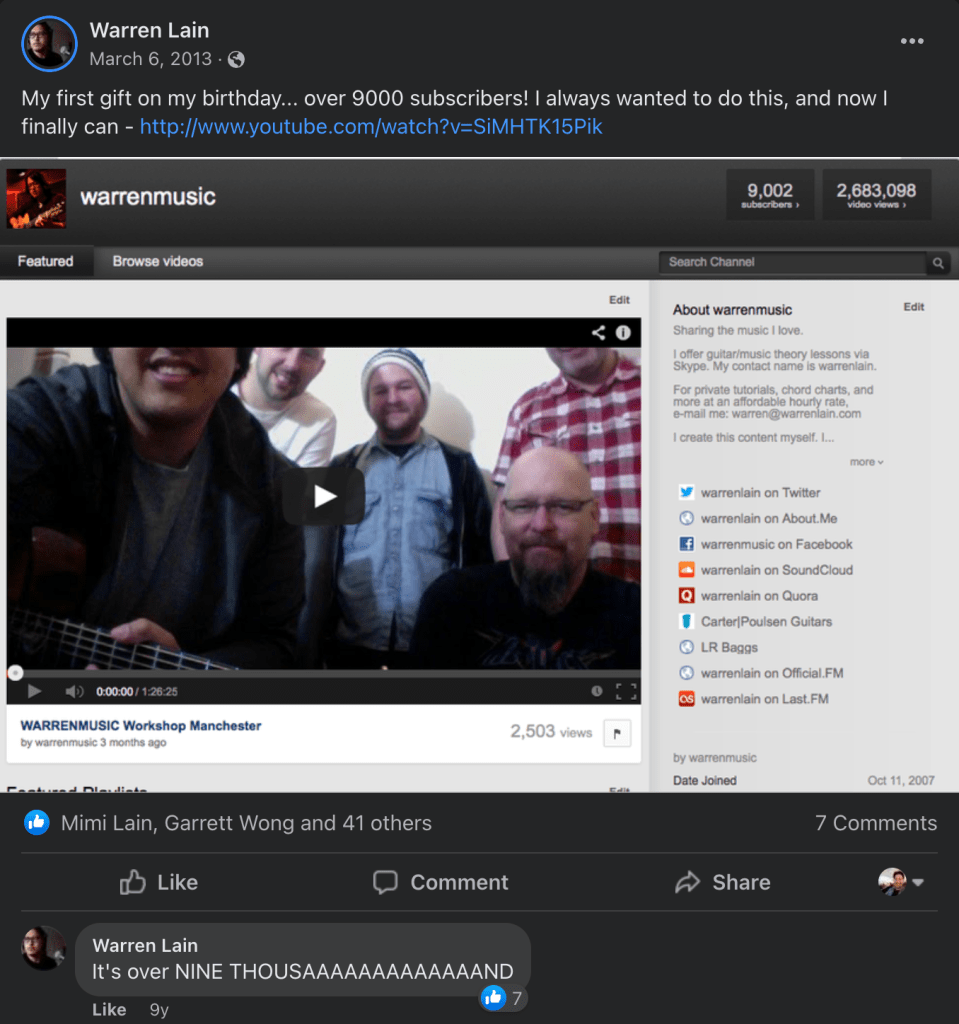
My channel grew steadily. I still remember when we crossed 9000 and I could finally post the Dragonball Z meme.

Couchsurfing and VOX

The channel opened doors I never could have imagined, from meeting my YouTube followers in places all over the world to private lessons via Skype (in pre-pandemic times!) and being interviewed and featured for my music analysis.

As my musical self was emerging, it slowly dawned on me that my YouTube audience was having a very different experience from my private students. Not everyone had a teacher to help them cultivate these skills I found so empowering. And for even a subset of those, some were certain they were incapable of developing them. To learn to hear, identify, understand, and interpret sound, to parse the wiggly air, and make sense of it would be the domain of the experts, surely not me! For these people, their relationship to music would only grow one guitar tab, one piano songbook at a time. I felt I was in a position to do something about that.

This became the crucial step of my own journey I focused the content of my series on, the step I believed everyone could take–to go from frustrated enjoyer of music and functional musician to active observer and fluent musician–that step deserved a series and a home on the web. A place where people could address the acquisition of beat awareness and relative pitch, and what comes after. Without insisting on sight-reading, and enabling us to go beyond beyond single songs as a community.

The fundamental skills that sharpened every musical impulse I had weren’t mine to hoard, but to be shared. And standard notation, something I knew I wasn’t alone in struggling with, would never be an exclusionary obstacle.

In 2012, I began thinking about what it might look like to help people play by ear. Three years later, I announced it and got to work.

I wish I could say the rest of the journey was smooth. Once I had figured out my calling, or something like that, I just powered through and slew every obstacle in my path. It’s more like I limped past the finish line. It was difficult, isolating, and it nearly broke me. I saw all of my worst tendencies for perfectionism and avoidance come out. I lacked executive functioning. I wasn’t able to draw boundaries. I finally understood how much emotional labor it required to birth it one day when I read a book about food and I wept from simply reading the book’s acknowledgments section, where the author thanked his family, friends, and editor. I also strangely felt like I understood George R. R. Martin:


I couldn’t have done this on my own, though. I had so much help. I owe huge thanks to Kevin who volunteered with the Melody and Harmony Modules, my friend and developer named Josh who I bounced so many ideas off of at so many steps along the way, my patient and supportive wife who bore with me, and a community both IRL and online. It is absolutely insane that I got to this point. And now…

Now there is room for what comes next.

Today, I am proud to announce the launch of The WARRENMUSIC Series: Foundation Modules.

Getting the Most out of Private Lessons

I’ve been teaching private lessons for 14 years. I’ve been a student of music for longer. I’ve taught guitar, bass, drums, piano, and voice. I’ve been in jazz bands, rock bands, church choirs, and Italian operas. I have studied western and world music theory, electronic music composition, recording and mixing, songwriting, and arranging. And through all of these things, what I have found most rewarding in my relationship to music is not the time spent learning any single instrument, style, habit, or from any one book, teacher, or method, but in an earnest devotion to something bigger… and that is Musicianship.

What is Musicianship?

Musicianship is a word that summarizes some big ideas: fluency in the language of music theory, a good handle on a primary instrument, a posture of active engagement with the music around you, but above all, a special level of attention paid to your own musical expression. The result of Musicianship is a quiet confidence, knowing that in any musical situation, you know who you are and you know what you can do musically.

Musicianship does not come passively, obviously. It must be developed with intention. It comes long in more concrete ways with a teacher. But the bulk of the development does not happen in the lesson. It happens at home, in your own room when no one else is watching. It takes place in the application, the wrestling, the continual journey of musical self-assessment. It is a fluid process more than it is a fixed goal. With that said, there are real habits to implement, real world markers, tests, and accomplishments to be observed along the way.

Classical training vs. being self-taught

I started with one foot in the classical world, and another in being self-taught. So I can relate to students with backgrounds in both academic and informal music education settings.

I know firsthand the experience of having my musical aptitude judged according to my ability to sight-read sheet music. I know the frustration of going through tabs only to find out how little there was to be gleaned about  music in general from them. I also know the value of learning music I love, and the deep kind of solitude and even feelings of inadequacy that come up when learning it when no tab, tutorial, or sheet music is there to rely on.

But what has kept me hungry and interested in developing my musicianship long-term was finding ways to make the music I loved somehow belong to me, ways to internalize it and make it my own. At different times that was the music of this composer, this song, this particular version of this song, this artist, this band, this album, style, this tradition, this instrument, or this method. Sometimes I had formal instruction (classical piano, jazz drums, choir, ear-training, music theory), and other times I have had to direct my own learning (I am self-taught guitar, rock drums, bass, non-classical piano, voice, music transcription, Ableton Live, synthesizers).

Each area of study has become a footnote in my journey; the depths to which I dove into each has become ingrained in my musical identity in some way. And a healthy kind of obsession was sparked with each new discovery and period of crazed devotion; I knew it was healthy when it energized my love of the craft, and made me want to come back to it over and over again. To this day I can name songs which have become personal unicorns (songs I keep chasing even if I know I can never get there)! But it isn’t about achieving what my favorite artists have achieved, at least not in any specific way. I may never accomplish what Eric Clapton, The Eagles, U2, Jars of Clay, Buddy Rich, Jaco Pastorius, Stevie Ray Vaughan, Pedro the Lion, Derek Webb, Dave Matthews, Radiohead, Bon Iver, The National, Grizzly Bear, James Blake, and Jai Paul have accomplished. But what I can do is internalize something deep about the music I love, make it my own, and allow that to inform the music I make, and take steps to put my musical expression out there.

On developing Musicianship:

All of this is made possible with a combination of three important parts: good habits, musical transcription, and a sober presumption that Musicianship is a process. Dedicate yourself to this process (more below) and trust that results will come–whether you see an immediate payoff or experience longer periods without a breakthrough–by putting in the work and learning to find the reward within the work is the true goal. The reward that comes from this Musicianship pursuit is one of the rare things in life that are not for anyone else, for school, nor for work… but for you.

Good habits include:
  • having a comfortable space that is devoted to making music, with good headphones, an audio source, and your instrument(s) easily within reach, i.e. not inside its case or locked in a closet
  • setting aside a reasonable amount of time 3-5x weekly of making music at a high level of focus. Try 10-15 minutes three times a week to start (there is no need to play the same song for four hours at a time… this is how you flame out)
  • listening to new music, old music with new ears, or fresh re-interpretations of old music
  • paying attention when live music is happening around you
  • noticing what you like and dislike about the music happening around you
  • writing your own music: fragments of ideas, fragments you eventually assemble into larger cohesive musical expressions you find satisfying (songs, instrumental pieces, works for other creative projects, etc.)
  • recording yourself playing, listening back, and identifying areas for improvement
  • breaking down difficult sections into manageable, bite-sized pieces, and repeating those difficult sections until they are as smooth as the easy sections
  • for improvisation: playing over chord changes once, re-writing/tweaking here and there, scrapping bits of it, replacing/upgrading those bits, and repeating this entire process many, many times until you are satisfied, and when you aren’t satisfied, going for a walk, coming back, and repeating it again.
  • putting it out there in some way, either via uploading it, or sharing it with someone else whose musical opinion you respect and who respects you for the purposes of accountability and/or perspective
Musical transcription is:
  1. recognizing what’s happening in the melody, harmony, and rhythm of the music you’re studying (ear-training)
  2. understanding the ideas that are in the music but also bigger than any one song (music theory)
  3. writing it down so you don’t forget it, you can analyze and interpret it, gain deeper levels of insight, and make it your own. I have developed a system for myself and my students which I believe is optimal for learning transcription. It is based on the Time Unit Box System, Moveable Do, and Roman Numeral Chord Analysis, and it is called the WARRENMUSIC Grid. More on that below.
The simple (but not easy!) three step process I rely on when it comes to developing Musicianship is:
  1. listening to and learning how to play music you love note-for-note,
  2. breaking it all down, gleaning insight from it, thinking about what musical ideas are in it, and recognizing what musical ideas are in it but also bigger than the song itself, and ultimately,
  3. re-contextualizing it (doing something new with it). This can be through a cover of a song you love but done in a way that honors what is in the original but does not copy superficially, or through an theory exercise prompted by creative constraints taken directly from the original song or multiple songs, or through some other kind of remix or re-framing of the original music.

In private lessons, I personally guide you through any/all of this.

While I take my active role in your journey seriously, the greatest truth I want to impart is a deep security in the knowledge that, above all, the investment you make in your own Musicianship is the main thing. And it will never let you down. Making music is a lifelong pursuit. Not only will you never reach the bottom, you will never regret developing your own musicianship.

Standard Notation–which is now ubiquitous in music programs everywhere as well as the jazz and classical worlds–was invented a few hundred years ago as a way to help composers more efficiently and effectively convey detailed technical instructions to performers who were part of a tradition of music based in Western Europe. It did the job it was made for beautifully. But despite its prevalence, it is not without its problems. Standard Notation relies on esoteric symbols and italian words to be decoded, as well as time signatures that don’t mean what they say, a small number of the many pitfalls that come from inheriting a system increasingly unfit for the needs of students of music today. As popular music is increasingly written, performed, and produced by different communities of people with different musical priorities, and music production methods are increasingly electronic, synthesizer, sample- and software-based, and in bedrooms, attics, and basements rather than symphony halls, why is Western European Classical Notation still called “Standard Notation?”

Tabs and YouTube tutorials have become the de facto Internet standard of learning the guitar. With someone showing you where to put your fingers or fixed-width fonts to help keep things orderly, it’s never been a better time to learn guitar, with regard to access. But when the tutorial ends, or in the event that the tab is inaccurate/doesn’t exist for the song you want to learn, progress usually stops as well. Because no matter how good the tutorial or tab is, as long as the primary focus of these formats is on what our fingers are doing on the fretboard, specific to only that one song, any musical features and ideas within them remain hidden. Musical concepts and principles are even farther away. Nothing is generalized, everything to be gained is limited to one riff, one section, and one song. Learning a new song via tab or tutorial is an entirely new undertaking each time, and any advancement in recognition or appreciation of musical ideas (ear-training and music theory) is shallow. Because tabs promote a visual, paint-by-numbers approach to the guitar, they do so at the expense of furthering Musicianship.

What we need is a theoretically instructive, listener-centric alternative for our modern purposes. Enter, the WARRENMUSIC Grid.

The WARRENMUSIC Grid, based on the Time Unit Box System, is intuitive, fast, modular, and communicable. Embracing cipher notation (Scale Degrees) as a means of introducing relative pitch, and chord numerals to make chord progressions and harmonic analysis easier, the WARRENMUSIC Grid is my attempt to bridge the gap between the best of the music theory of the Western European Classical tradition, world music theory, and the new music of today.

The Grid isn’t just for students. It’s for me, too. It’s how I learn new songs, and how I share what I learn in a digestible way with others. It’s one of the reasons I was able to learn and teach Radiohead songs on YouTube the day they came out.

If nothing else, TUBS is simple, and unassuming. It is more universal, as both seasoned musicians and beginners can grasp it intuitively. Scale Degrees can be replaced with note names, Chord Numerals with chord names, and the system is flexible enough to accommodate any kind of music.

And now that you are taking lessons from me, it’s all yours.

“It’s all yours.”

I’ll finish this with a personal anecdote I come back to again and again. It’s the story about a guitarist and songwriter named Derek Webb, and specifically the three fingerstyle songs he wrote when he was a member of a popular Christian folk/rock band called Caedmon’s Call.

The friend who introduced me to one of these songs on a burned CD had surmised that they were all played by one man. But the first time I heard these intricate fingerpicking techniques, melodic motifs, unusual chord voicings, rubato, modulations, and harmonics, I was flummoxed. “How…?” I thought.

I discovered the next two of these three songs buried deep in the tracklisting of some obscure unreleased, fan club only CDs called The Guild Collection: “Down Around You,” “Seagull Song,” and “Revelation.” Since this was the early 2000s, I had scour eBay for them and have them shipped to my college dorm room.

At the time, I was in my first year at UCLA, and a teacher asked everyone to transcribe a song note-for-note to the best of our ability for our world music theory class. I chose one of these songs, and that choice led me down a very unexpected path.

What happened over the next week or so were hours at a time spent in an aural world where nothing existed but the song I was trying to figure out. There was no ultimate-guitar.com, there was no YouTube, there was no piano/vocal/guitar songbook, no instructional DVD. At first, I thought I had set myself up to fail. Later, I realized, I set myself up to succeed. I put myself in a corner where the only way out were my ears and my understanding of what I was hearing.

The first song frustrated me until I figured out the tuning. DGDGAD. Wow, what an unusual tuning, I thought. But from then on, the whole thing gained steam. I learned not just the first song, but the other two as well. I learned them note-for-note. I learned every hammer-on, double pull-off, broken chord, and key change.

I played these songs for months, each round of with more detail, more nuance. Eventually, it became impractical, with only one guitar, to tune back to standard tuning every time I wanted to play a “regular” song. I had signed up to play guitar for church, and these songs were all in common keys like C, G, D A, E… and so I thought to myself, instead of tuning back to standard tuning every time and risking my strings breaking, why not just stay in DGDGAD and learn how to play families of chords in this new tuning instead?

I learned more about how the guitar works over that time period–how to apply the sounds in my ears and in my head to the fretboard–better than ever before.

Fast forward nine years, when I was deciding what to share next with my audience on my young YouTube channel, I pulled these three songs out of the closet and dusted them off.

The reception upon my uploading of these covers was mild. My Radiohead tutorials and covers had garnered much more attention, especially since my early series of videos on In Rainbows made me “the Radiohead guy” for most of my subscribers.

But one day out of the blue, Derek Webb left me a comment on my video. The Derek Webb himself. Apparently, a fan of his and his band Caedmon’s Call had stumbled upon one of my covers and pointed them out to Derek himself on Twitter.

He wrote this on the video page:

“i am BLOWN away by this. no idea how you found, let alone learned this song. but i’m sure i couldn’t play it anymore. so it’s all yours. very well done.”

And this on Twitter:

Unless I read the first comment wrong… he made me the honorary writer of the song. Which is absolutely nuts. Never in my wildest dreams could I imagine an artist I looked up to saying this to me. Similar to the recent movie about The Beatles’ music disappearing from the universe, and only one singer/guitarist remembered their catalogue, a similar scenario happened to me. One artist forgot how to play his song, and I honored it as closely as I could. In 2001, I had approached these songs as if I were making them mine, and then it literally (or figuratively?) happened.

I don’t dare to hope for this to happen to me again. I still hope Derek Webb plays the song again one day. But the important lesson I learned that day was a confirmation of something I knew all along… that the value was the work. What I put into those songs–the time invested in hyper-focused ear-training and technique, the little space I turned into my sacred guitar cave (my dorm room)–all of that work would not go to waste. Even if Derek Webb never saw the covers, all of that work would still have value. I later connected with him on Facebook, and he shared more words of praise for me. But what I came away with was so much more valuable than the words… it was the awareness that it’s the quality of the time spent in your music cave that matters more than anything, and that is when all of the music you learn becomes yours.

The Time Unit Box System and the WARRENMUSIC Grid

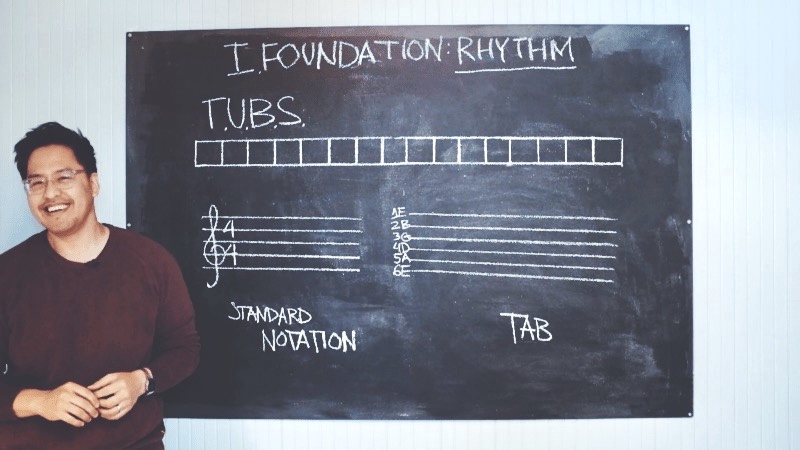
The Time Unit Box System vs. Standard Notation (and Tablature)

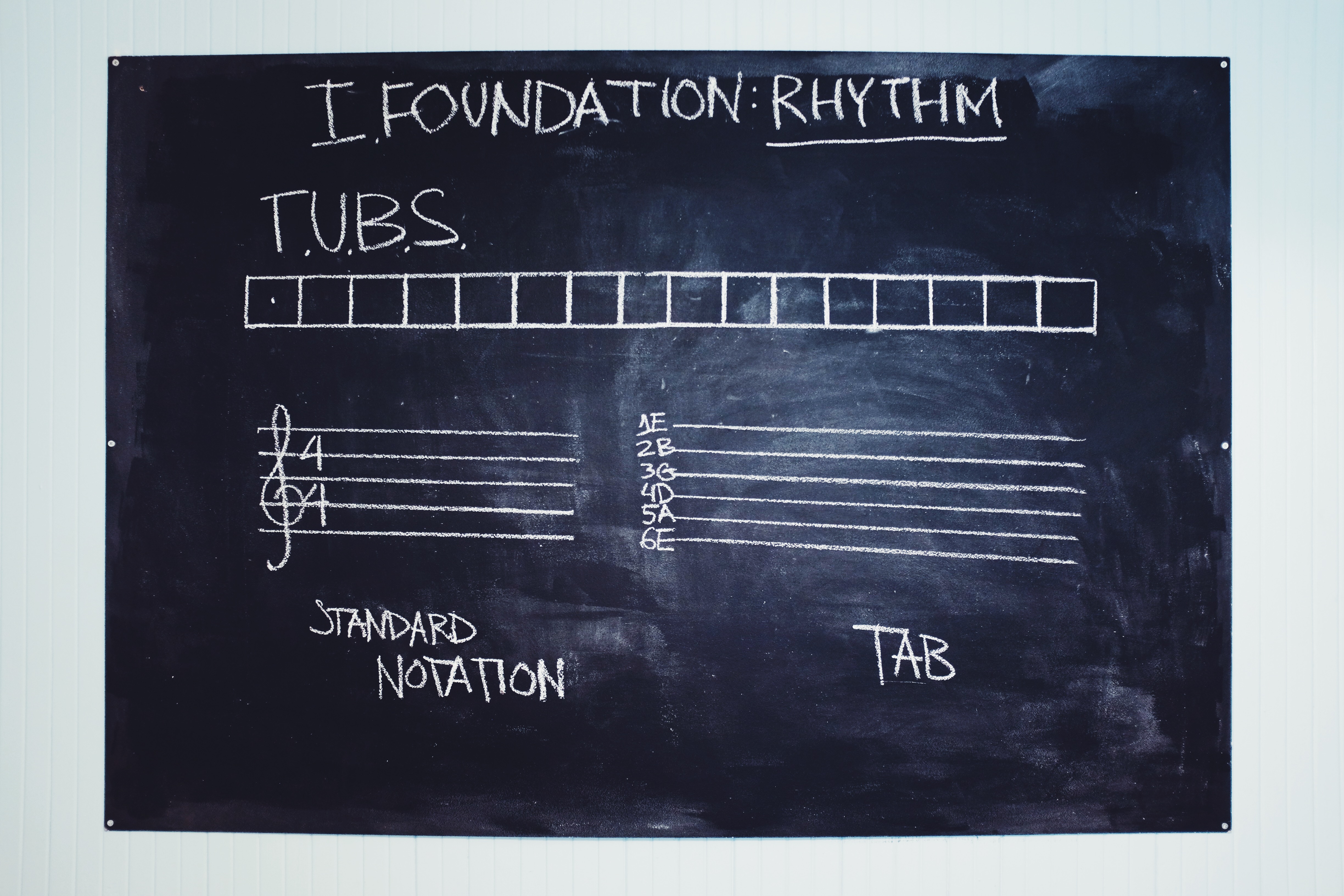
In TUBS, the boxes of a grid represent equal units of time, consistent from column to column, and from row to row. This is how MPCs, MIDI sequencers, and many DAW piano rolls work today. If there is an event in a Time Unit Box, play it. If there is no event in the Time Unit Box, don’t play anything. The process is repeated for the next box, and so on, and so on.

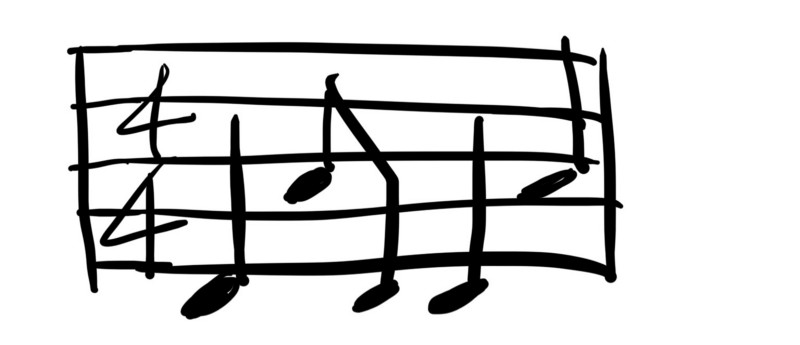
As you can see, I struggled with this graphic.

In Standard Notation, with respect to Rhythm, musical events are represented by a combination of note heads and stems, as well as their respective rests which convey explicit note durations and silences according to the composer’s idea of what the performer should play. The composer instructs not just when music happens, but how long it should be when it does, and how long it shouldn’t be when it doesn’t. The performer is expected to read and decode the symbols and excel at it if they wish to have full access.

But what happens if the reader does not excel at reading and decoding? What happens if the reader has no access to the composer’s transcription?

I sought out an alternative.

In the first example, I have transcribed something breakdancers know and love, James Brown’s “Funky Drummer,” in TUBS format.

In my transcription of this timeless break by Clyde Stubblefield, “o”s represent open hi-hats, “x”s represent rimshots, “…”s represent buzz strokes.

This how I think about Rhythm. This is how I organize what I am hearing, Melody and Harmony included.

In the second example, I’ve transcribed an old bass line from my middle school days by Cake. This is a modification of TUBS, where notes are instead represented by Scale Degrees, placed in rhythmic context without obscuring their melodic function.

In a throwback to the nineties, I chose to transcribe the bass part for “The Distance” by Cake, organized by song form and lyric. All Scale Degrees represent degrees of the E Minor Scale. The lyrics (not pictured) are shown line by line beneath.

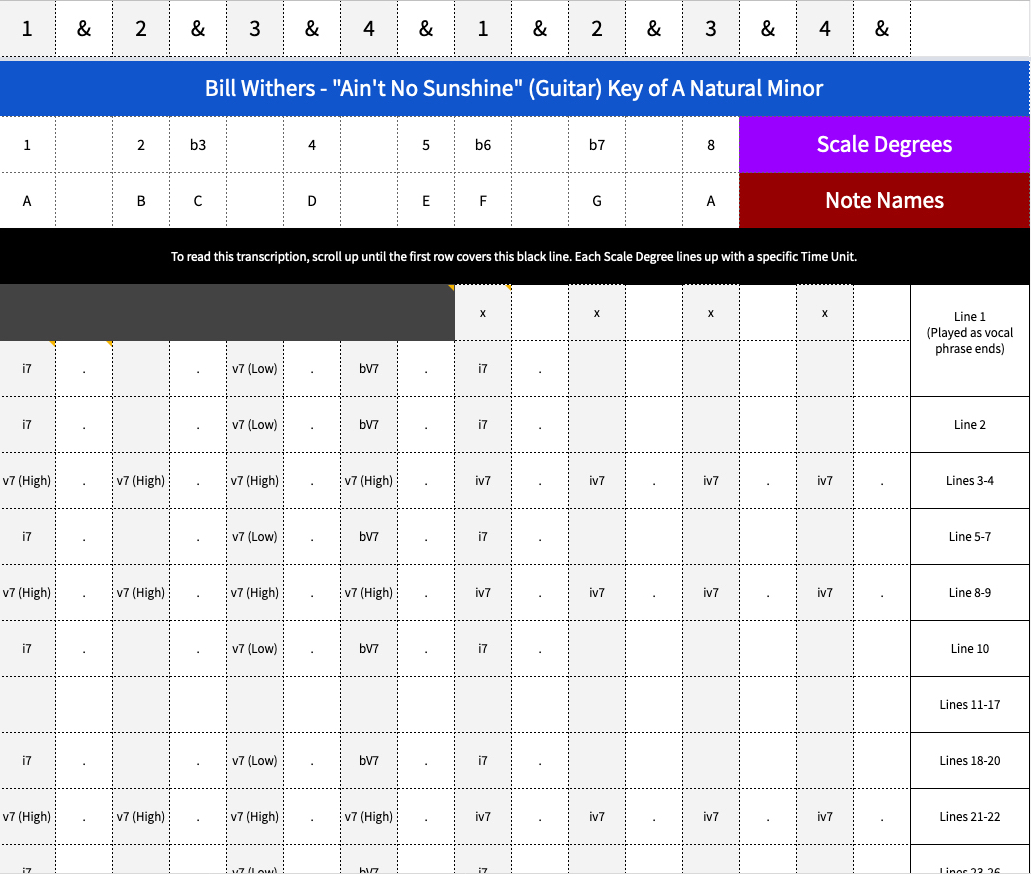
In the third example, I’ve transcribed a classic chord progression from Bill Withers, placing his broken chords in their rhythmic context without sacrificing their harmonic function.

A snippet from my transcription of “Aint No Sunshine” by Bill Withers, where chords are shown as Chord Numerals. The dots refer to the broken nature of the chord, and the chord legend (not pictured) follows beneath the chord chart.

TUBS is an intuitive, fast, communicable, and modular alternative. It gives Clyde Stubblefield’s snare buzz strokes, each of Gabe Nelson’s (I had to look his name up) bass notes, and every Bill Withers bass note and broken chord a location on the grid, a kind of rhythmic address. The result, taking from what James Koetting and Philip Harland saw back in 1962–1970* making it a theoretically instructive and listener-centric alternative for our modern purposes, is what I call the WARRENMUSIC Grid. It’s my attempt to bridge the gap between the rich history of the Western European tradition of music, and the new music of today.

This is how I learn new songs, and how I share what I learn in a digestible way with others.

If nothing else, TUBS is simple, and unassuming. I would argue that it is more universal. After all, music has gone digital.

Where I use Scale Degrees for Melody, you can easily use Note Names instead. Where I use Chord Numerals for Harmony, you can easily use Chord Names. Now it’s yours.

Check out the full transcriptions, along with note-for-note MIDI clips and video breakdowns of four other songs I’ve selected, transcription exercises, visual aids, and more in my upcoming Rhythm Module.

WARRENMUSIC Series — Rhythm Module, Episode 03: “The Time Unit Box System and the WARRENMUSIC Grid”

Scale Spelling Wheel and the Circle of Fifths

Scale Spelling Wheel — Exterior: All Note Names, Interior: Degrees of the Major Scale

When broaching the subject of the Circle of Fifths and other learning tools for music, it usually elicits two reactions: “Yeah, what about it? That’s basic,” or “I don’t get it at all, it’s super intimidating.” One crowd learned it a long time ago, the other managed to avoid it for as long as possible. As a music teacher, I live somewhere in between those two extremes every day: between those who are fluent in the language of Western music theory, and those with a sincere love for music but without the ability to participate in the exchange of musical ideas.

I certainly have my pet peeves with aspects of Standard Notation, a system we’ve inherited from hundreds of years ago from a dude named Guido. I find myself turning various ideas over and over every day: Are naming conventions for chords and scales too prescriptive? Do enharmonic equivalents help more than harm? Why do we still cling to the bottom number of time signatures when it doesn’t always mean what it says? But I still come back to it in the end; I recognize the immense value the Euro-centric tradition of musical deconstruction holds, and that bridging the gap between these kinds of thought and those who have successfully avoided them is worth the trouble. Ultimately, the ability to access, transmit, remix, and challenge musical ideas across different musical cultures inevitably leads to a net gain. And it may be a while before we see a much needed cultural shift in Western music education, but I digress.

My most recent attempt at bridging the gap has been to make the Circle of Fifths and the spelling of scales and chords a little more interactive. It’s a circular sequence of the twelve note names, and spinning it around and noticing how it lines up with what relationships are on the inside of the circle helps with visualizing the underpinnings of deeper concepts. I call it the Scale Spelling Wheel.

The full concept came as a result of working with students who were having trouble with a more linear approach to spelling out scales and accounting for sharps and flats (a common problem, especially for guitarists who came into music through chord shapes, positions, and tabs). It can break the Circle of Fifths down, as well as make names of intervals, scales/modes, and chords feel more intuitive.

Whereas the Circle of Fifths feels like an esoteric, inscrutable music axiom to many today, it was originally about making life easier for those writing and reading music. Ironically, it was a tool for empowerment. It helped students of composition — which is just a fancy word for songwriting — clear the mental hurdles surrounding sight-reading and interpretation, enabling quicker analysis and innovation, bringing it closer the speed of intuition. With the Circle of Fifths, writing the kind of music that went wherever it pleased and understanding all of the modulation — with accidentals flitting this way and that, shifting from tonal center to tonal center, dancing through evolving aural landscapes — was made more attainable.

The Circle of Fifths was a really clever diagram, initially seen as a composers’ tool. I love it. My former assistant even bought me one of these for a birthday gift, and when I saw it, I laughed like I heard a good pun. And then I immediately started criticizing the pedagogy behind its design to myself silently.

If I had to explain the Circle of Fifths to a complete beginner, without a visual, I would describe it as a diagram resembling a clock, but with twelve note names instead of the twelve hours. At the top, it starts with C in the 12 o’clock position, reads G, D, A, E, B, F#, and C# clockwise from one to seven o’clock, and reads F, Bb, Eb, Ab, Db, Gb, and Cb from eleven to five o’clock, counter-clockwise. The note names running in opposite directions join up again at the bottom with both F# and Gb sharing the six o’clock position, whereas the C# and Db co-habitate at seven o’clock, and the Cb and B occupy the five o’clock spot together.

Beginners, did that help? Whew, that was hard.

If you recognize the Circle of Fifths, you know that this is not the Circle of Fifths. Instead, it’s a way to flesh out what exists in between the Circle’s points. There are certainly a number of musical situations in which having the Circle of Fifths handy might be more helpful than this. This Scale Spelling Wheel is about something more fundamental. If you’ve seen the Circle of Fifths but never understood it, you might understand it better after playing with this Wheel.

Through eleven years of teaching music theory, I’ve encountered many I might describe as functional musicians; these are people who play music in their day to day life; they play guitar covers, improvise with pentatonic scales, play in a friend’s band, record basic solo material… but they don’t understand the nuts and bolts of basic songwriting. They’ve usually skipped over spelling out scales and chords entirely, and they were able to get by. The situations in which note name spelling came up were avoided. Situations like…

  • figuring out which notes to avoid in a given section,
  • working out which notes belong in a chord,
  • finding the right notes for a solo/melody, or
  • transposing a given melody or chord progression.

(This is to say nothing of the confusion surrounding why notes like E-sharp and C-flat exist and why they help us in the bigger picture of understanding music, but that falls a little bit outside the scope of this post*.)

I preach to my students that if they can mentally combine just two things, they’ll make a quantum leap in their musicianship, and join the conversation. If they can spell out scales, using only

  1. the twelve note names, and
  2. the relationships of the Major Scale,

they can not only spell out the notes of any key, any chord, and therefore, identify the notes they want to play or notes they wish to avoid in any given situation. They can even re-create the Circle of Fifths mentally using just their working memory.

Amidst the more common ways we approach writing and making music today, we entirely overlook or intentionally avoid stuff like the Circle of Fifths and the whole idea of committing theory concepts to memory in general.

We don’t expect Kurt Vile to give us sheet music (it would probably just say, “Play something that sounds really shimmery or hazy and mumble. Everyone will love it.”).

We don’t dare to dream of Dave Knudson coming to our doorstep to detail his thought process, step-by-step, for how he comes up with his whammy-pedaling, two-hand-tapping, melody-harmony-rhythm-all-in-one riffs.

We don’t imagine Thom Yorke handing us the recipes to his so-dark-they’re-basically-joyous sounds…

We’re not even sure the musical innovators we love write any of their methods!

Instead, we buy piano/vocal/guitar books written by a third party, watch YouTube tutorials (which are often just glorified tabs), and check Ultimate Guitar for the user submissions with the highest star ratings… after all, when it comes to merely mimicking our favorite songs, there’s nothing better, right?

But the hard truth is, that if gaining access to the insights of our favorite songwriters matters at all, then there is no denying that outsourcing our musicianship to others is a crutch. And people on crutches don’t run.

There is no substitute for identifying and understanding the musical ideas in the music we love for ourselves, a.k.a. “musicianship.”

When making music, the crutch is probably most clear when theory-avoiding, functionally-oriented musicians run out of ideas. Sincere expression comes out sounding like a cliché. In the same situation, the more ear-aware/theory-fluent musicians have a different problem: there are too many good musical choices I can make here, which one is best?

I’ll take the latter over the former any day.

My hope as a music teacher is really just about convincing you that musical fluency in music grows out of tiny decisions. Things like:

  • making a habit of identifying your favorite musical moments,
  • paying attention to the ideas embedded in them,
  • making connections to other songs/albums/artists/genres intuitively,
  • asking questions about broader songwriting principles, and
  • renewing appreciation for the ground already covered by our favorite songwriters (not to mention all of the timeless work already in the “canon”).

The gems of music theory and the beauty of musical expression overall shouldn’t feel like terraforming Mars; they should be within arm’s reach.

Nothing delights me quite like seeing a functional musician dipping their toe in, and developing themselves to be their own bridge.

Understanding what happens when we move between keys is a great start.

These two interactive YouTube videos are meant to help us navigate the sharp and flat side of the Circle of Fifths, respectively, and are just the first of several potential applications for it.

To interact with YouTube’s keyboard functionality, view these two videos on desktop.

Use your keyboard numbers from 1–7 to “spin” through the notes of the wheel, one ascending fifth at a time. In the top left, observe the key changing with each video skip. The corresponding number of sharps in that key is visible in the top right, and the specific sharp notes are identified in the center of the image. I traced a thin line between the sharp notes in the center and each new sharp note every time a new sharp is introduced. It was a bit of a struggle trying to work out what might be too little and what might feel like too much visual information. I welcome feedback. And yes, the font around the circle is the same font used on all Dharma Initiative labels from ABC’s hit show LOST.

Use your keyboard numbers from 1–7 to “spin” through the notes of the wheel, one descending fifth at a time. In the top left, the corresponding flat key changes with each jump. The number of flats in each key is now visible in the top right, and the specific flat notes are identified in the center. Note the thin line between the flat notes in the center and each new flat note every time a new flat is introduced. The new flat appears on the “4” of each key, rather than on the “7” in the sharp keys.

The Scale Spelling Wheel as I’ve made it arranges the note names, clockwise, from C to C (low to high), with all twelve tones in between, in a circle. It makes life easier by translating what was occurring in working memory into a visual.

As a wheel, it alludes to the cyclical nature of pitch; but in this application it’s about visualizing the pitch relationships represented by the different points around the Circle of Fifths. As useful as the Circle of Fifths can be, it doesn’t do anything for those of us without the fundamental skill of spelling out scales (recalling the note names in order from lowest to highest including the sharps and flats in their appropriate places) already in place. Without the context of notes existing in between the points of the Circle of Fifths, the cleverness of the original design (and charts that follow it like the ones listing relative minor scales) loses its meaning, and it becomes one more thing to which nobody relates, except for the ones who don’t need it anymore.

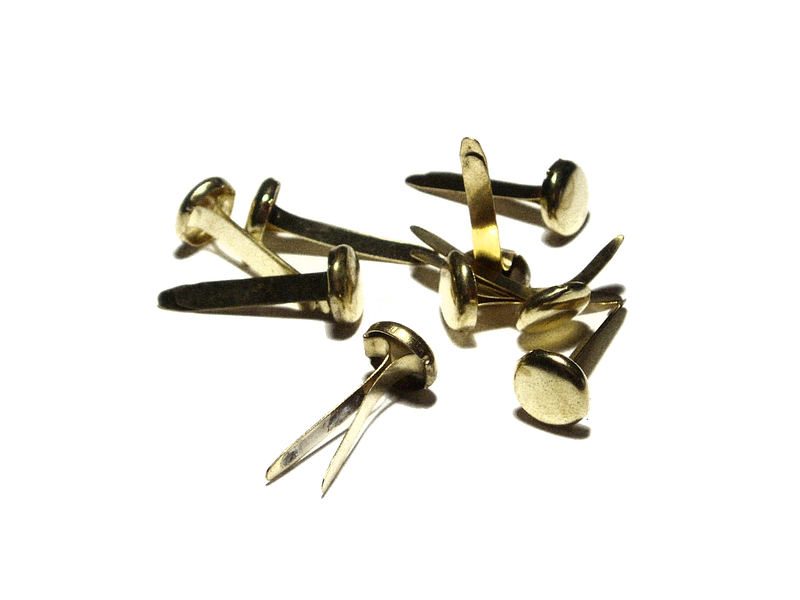
This Scale Spelling Wheel occurred to me when students exhibited particular difficulty starting from memory. I realized that with a “brad,” (also known in French as an “attache parisienne”) and some transparent sheets, this could help fill in for those moments our minds go blank, and we need a little boost.

Remember these?

With the Scale Spelling Wheel, one can actually interact with the concept physically, half step by half step. An otherwise functional musician can now get into the mind of a songwriter/composer, seeing which notes belong and don’t belong in any given key.

You can have one in your hands, too.

Here’s how it works:

(You can receive full resolution images for free when you opt in to receive my newsletter.)

1. Print this image out on white paper. It represents the twelve tones, enharmonic names in the double-rowed boxes, and the degrees (1–7) of the Major Scale running along the interior of the circle.


2. Print any of the following three images on transparency sheets or tracing paper (all note names, flat key note names, and sharp key note names, respectively):


All Note Names (except for E-sharp, B-sharp, C-flat, and F-flat which are relevant in F-sharp Major, B-sharp Major, G-flat Major, and C-flat Major, respectively)

Inner Row with Note Names relevant to Flat Keys

Outer Row with Note Names relevant to Sharp Keys

3. Superimpose the transparent layer over the white paper layer. You’ll get something that looks like this image below. You can then punch a hole through the middle and fasten the brad and spin your way to music theory enlightenment.

All Note Names with Degrees of the Major Scale
Instead of the Circle of Fifths, what you have is something more fundamental: a wheel with the twelve note names on the outside, and a wheel representing the permanent relationships of the Major Scale on the inside. Fix one, spin the other.

To spell out a scale, simply line up whichever key you want by spinning until the tonic (home note) corresponds to the “1”/twelve o’clock. For example, you can see I’ve lined it up with “C” at the top. This means that we’re in the key of C Major, with the subsequent scale degrees lined up to their respective note names: the second degree with D, the “3” of the key with E, the “4” with F, and so on.

This will work on any of the twelve tones. Read the outer row of note names to spell out the sharp keys, and read the inner row of note names to spell out the flat keys. Note how many sharps or flats there are, and note which sharps or flats show up in that key. Before long, you’ll be mimicking in your hands what composers/songwriters have been doing in their heads.

To visualize each point around the Circle of Fifths, you can spin it counter-clockwise so that whichever note corresponds to the “5” moves to the “1” spot. Each time you do this, you move along from point to point on one side of the Circle of Fifths, in this case, the sharp side. To move in the other direction, spin it clockwise so that whichever note corresponds to the “4” (which is a fifth down, instead of up like on the sharp side of the Circle) moves to the “1” spot. When you do this, you move along the flat side of the Circle of Fifths.

If you’ve got the interactive video pulled up, you’ll get additional info that isn’t in the layers just above, the kind of observations that you could make if you memorized it like it were a multiplication table. 

The inner circle from 1–7 indicates the Whole-Whole-Half-Whole-Whole-Whole-Half relationships of the Major Scale. And yes, the interior wheel with the Scale Degrees 1–7 could be swapped out so that the degrees follow any scale/mode you may wish to spell out in the twelve tone system, from the Church Modes (including the the Minor Scale and its variations), to pentatonic scales, or a chord definition, or any number of other concepts that require naming a note.

This is what I meant when I said this Scale Spelling Wheel is bigger than just the Circle of Fifths.

Happy Scale Spelling!

Warren

*The F# Major Scale is spelled with a E-sharp instead of its enharmonic equivalent, F-natural. The C# Major Scale is spelled with a B-sharp instead of its enharmonic equivalent, C-natural. If you want to know why, study up on what music theory nerds call “enharmonic equivalent” notes.

P. S. — I can print a high quality wheel with transparent layers ready for assembly, ready for spinning. If you are interested, please fill out this short form so I can gauge interest and take pre-orders. Thanks!

OK Podcast

Since my last video interview with Prof. Brad Osborn (check that out here in case you missed it), I’ve been blocking out the noise and working hard on the Rhythm Module, a video course that introduces ear-training and music theory — a.k.a. musicianship — as it relates to Rhythm. It’s the third part of a three-part series (following the Melody and Harmony Module) that explores ways to build a lifelong bridge that connects The Music We Love with The Music We Make. Stay tuned for when that drops!

Today, I’m writing to share something I managed to squeeze into my incredibly tight schedule, which vacillates between dreading the release of my video series and complaining about the weather here on the East Coast: an appearance on “OK Podcast” by Sean Perrin of Clarineat.

Sean is a great interviewer with crazy podcasting experience as his other podcast on the clarinet has proven (it has listeners in 90 countries), and it shows. He’s also a huge Radiohead fan, and I was thoroughly amused to hear that he learned a few Radiohead songs from my tutorials.

So when he asked me to be the inaugural guest on his new podcast, I was super hyped and honored. Going at this YouTube thing now for 10 years plus, these kinds of things are still unreal to me (that people read and watch and listen to something I am shouting into the Void). But then I remember that, yeah… this passion we have for music connects us to something bigger than ourselves. Duh. Still pretty unreal, though.

Sean breaks down all of the topics we touched on in the podcast’s blog entry. Go check out OK Podcast and show him your support if you dig it!

Chord Numeral Flash Cards — Free Harmony Learning Tool

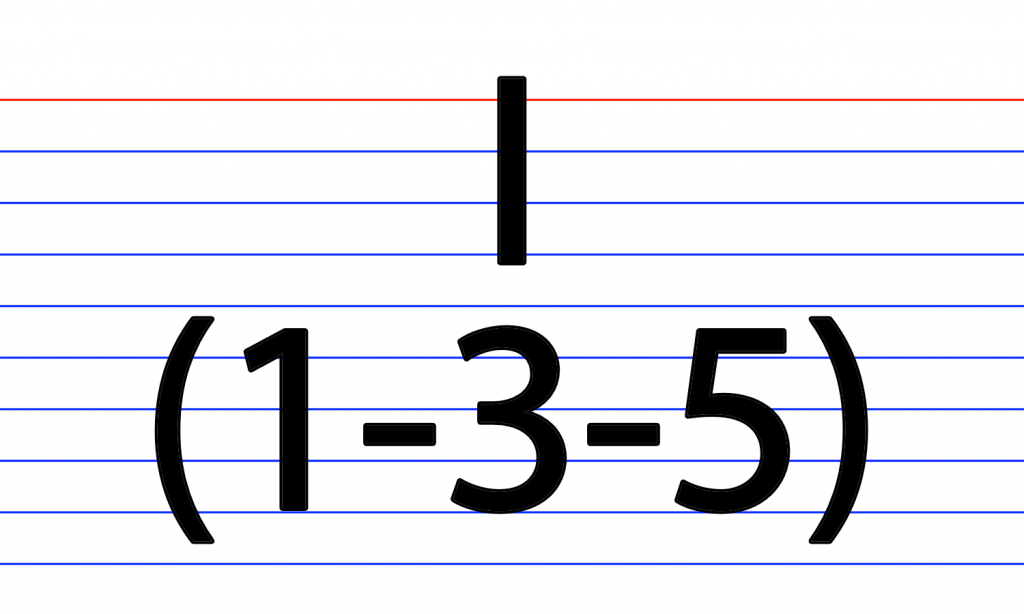
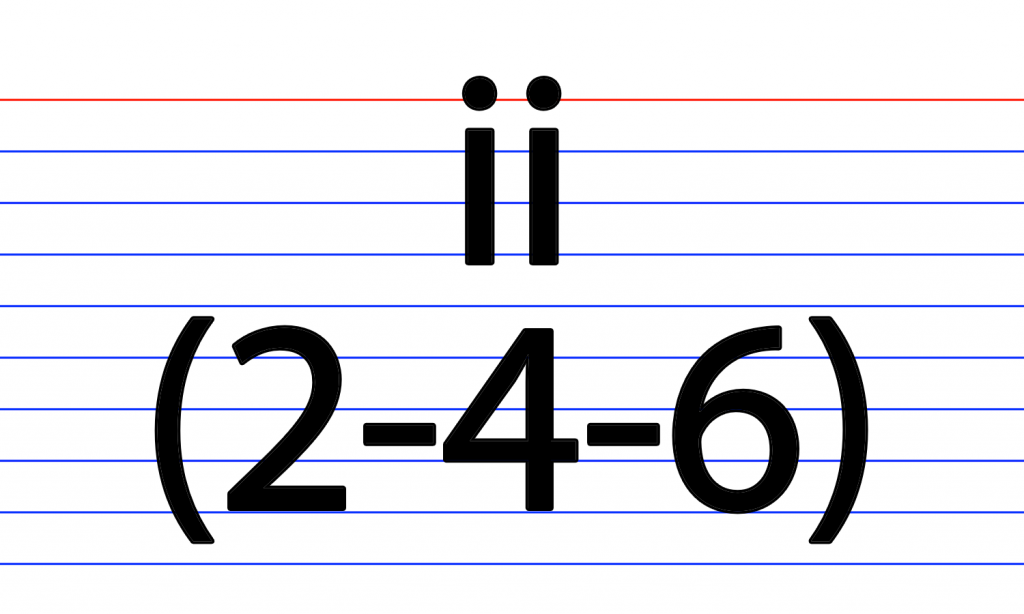
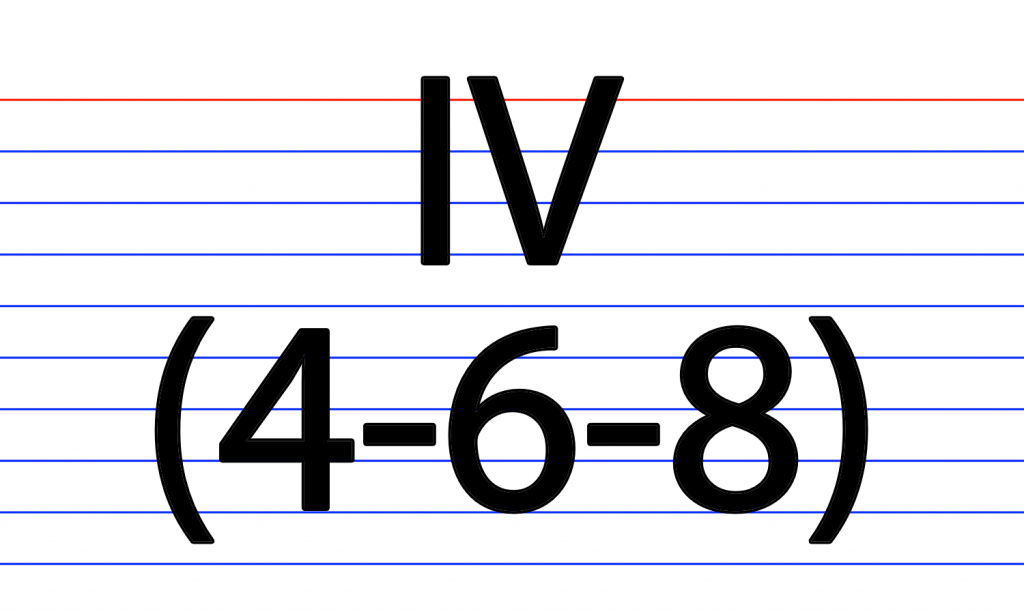
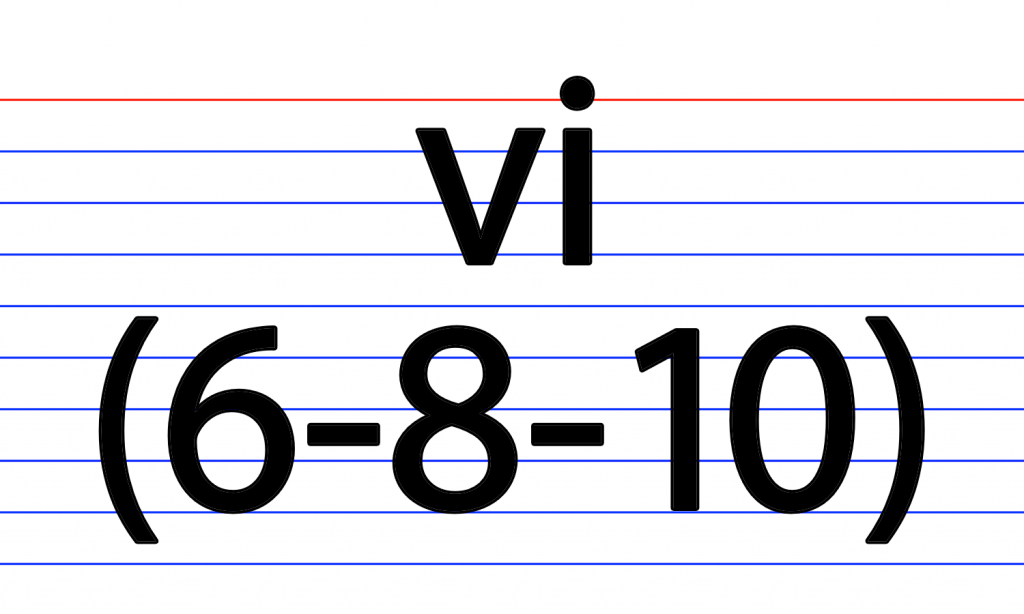
Chord Numerals - I, ii, iii, IV, V, and vi

There is a way to unlock the subject of Harmony, and that’s through Chord Numerals.

Playing chords and chord progressions by ear seems an unattainable feat for many. A dream never to be realized. But the truth is that you can learn how to play harmony by ear. How? Start with Chord Numerals.

Chord Numerals look just like roman numerals, but in the context of music, they represent the six most popular chords in human history; but most importantly, they do so in a way that combines how they sound with how they’re constructed. This is important. Combining sound with theory is the actual game-changer: chord names don’t do this (they de-emphasize functional/diatonic harmony, they promote absolute pitch and a static approach to harmony), guitar tabs don’t do this (they emphasize where you put your fingers over what you’re hearing and how chord progressions behave), and most guitar tutorials certainly do not do this (Why would they? You’re just there to learn one song, after all). The one exception in today’s music education landscape — sheet music — does combine sound with theory. But to use sheet music, one needs to learn how to read standard notation. And as ubiquitous as standard notation is, it is just as esoteric with its ledger lines, stems, noteheads, clefs, and jargon descended from Italian opera.

There is a better way to learn all of these real world chord progressions by ear.

Four Chord Song

Have you ever heard of the “Four Chord Song?” If you haven’t check out this hilariously funny and slightly acerbic comedic video.

The truth in this video is plain to see: many popular songs use a powerful chord progression.

The chord progression they call “1-2-3-4” in this performance is really I-V-vi-IV (pronounced “One-Five-Six-Four”). It just might be the most popular chord progression in musical history. It is the progression used in all of these popular songs, and many more:

  1. Journey — “Don’t Stop Believing,”
  2. James Blunt — “You’re Beautiful”
  3. Alphaville — “Forever Young”
  4. Jason Mraz — I’m Yours
  5. Mika — Happy Ending
  6. Alex Lloyd — Amazing
  7. The Calling — Wherever You Will Go
  8. Elton John — Can You Feel The Love Tonight,
  9. Maroon 5 — She Will Be Loved
  10. The Last Goodnight — Pictures Of You
  11. U2 — With Or Without You
  12. Crowded House — Fall At Your Feet
  13. Kasey Chambers — Not Pretty Enough
  14. The Beatles — Let it Be
  15. Red Hot Chili Peppers — Under the Bridge
  16. Daryl Braithwaite — The Horses
  17. Bob Marley — No Woman No Cry
  18. Marcy Playground — Sex and Candy
  19. Men At Work — Land Down Under
  20. Banjo Patterson’s Waltzing Matilda
  21. A Ha — Take On Me
  22. Green Day — When I Come Around
  23. Eagle Eye Cherry — Save Tonight
  24. Toto — Africa
  25. Beyonce — If I Were A Boy
  26. The Offspring — Self Esteem
  27. The Offspring — You’re Gonna Go Far Kid
  28. Pink — You and Your Hand
  29. Lady Gaga — Poker Face
  30. Aqua — Barbie Girl
  31. The Fray — You Found Me
  32. 30h!3 — Don’t Trust Me
  33. MGMT — Kids
  34. Tim Minchin — Canvas Bags
  35. Natalie Imbruglia — Torn
  36. Five For Fighting — Superman
  37. Missy Higgins — Scar

Chord Numeral Flash Cards and You

Chord Numerals represent the six most popular chords from the Major Scale. Using these Chord Numeral flash cards, you can try any number of the following exercises to improve your level of fluency in Harmony:

  1. Chord Spelling — perhaps the most immediately useful of these exercises when it comes to improving your musical communication with others, you can use these flash cards as a way to challenge your ability to spell chords. Lay the flash cards face down in a random order, pick any key, and flip one over. Now name the chord, and spell the notes of the chord out. Example: Key of C, flip over card “IV.” What is your answer? “F Major, F-A-C.”
  2. Songwriting — Stuck when it comes to writing new chord progressions? You can create new (diatonic) chord progressions you haven’t used in your songwriting before. Example, vi-iii-IV-I sounds nice. In the key of C, that means Am-Em-F-C. Try it!
  3. Relative Pitch Training — the most musically beneficial skill to come from quizzing yourself in Harmony is most certainly the ability to outline a chord by singing it out loud without the aid of an instrument. Lay the flash cards face down in a random order, play any tonic, and flip one over. Now sing the chord out, relative to the tonic. Example: Key of C, flip over card “IV.” Your task: play the “C” to establish your tonic, then sing F Major (F-A-C) out loud without any help from an instrument. When you can hear the “1” (a.k.a. the tonic) but can sing “4–6–8” (a.k.a. the subdominant, submediant, tonic, or the subdominant chord) without any other reference pitches, you build your internal model of the Major Scale from that tonic. An internal model of pitch relationships is EVERYTHING when it comes to ear-training. I can’t possibly overstate it.

Why Should We Care About Music Theory?

What place does music theory have in songwriting? Can it be helpful? Stifling? Maybe both? Why are we looking at a picture of a pie?

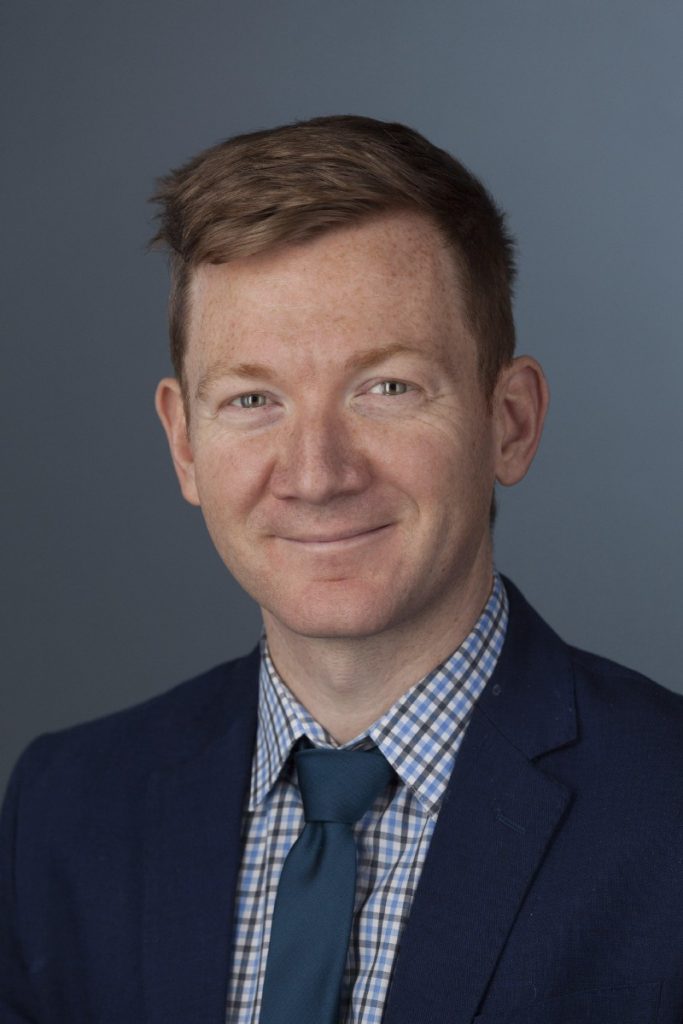
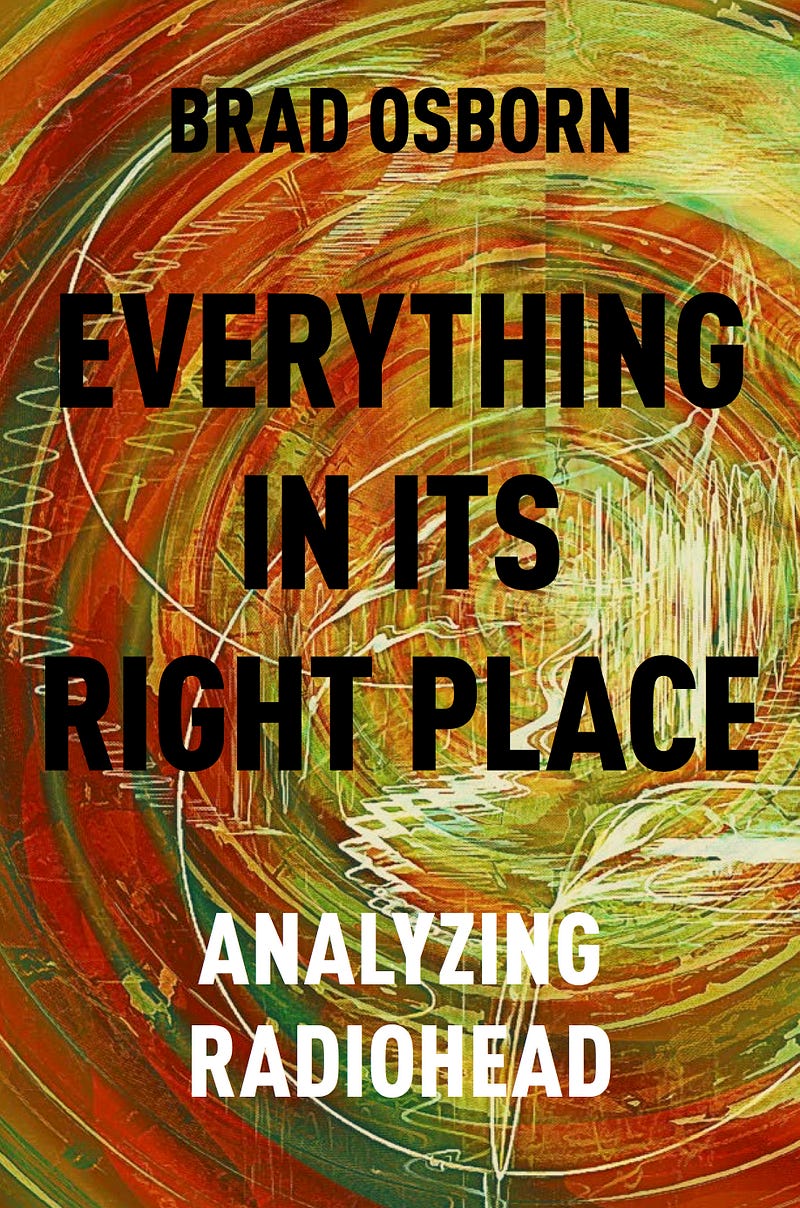
In an interview I conducted last month, I had the opportunity to explore these questions with Prof. Brad Osborn, a music theory professor from the University of Kansas and the author of “Everything In Its Right Place: Analyzing Radiohead” from Oxford University Press.

Prof. Brad Osborn, Music Theory Professor at University of Kansas and Author of “Everything In Its Right Place: Analyzing Radiohead”

It was so great to steal Prof. Brad for a few moments between classes. As an independent music educator, I sometimes don’t know if I am crazy or just an alternative thinker when I talk to others about traditional music theory and methods of analysis. But I definitely learned a few things from Brad and felt deeply affirmed at the same time by our mutual appreciation for holistic musicianship.

I thought Brad would be the perfect person to ask this simple question: as fans of Radiohead and musicians ourselves, why should we care about music theory? At its core, his answer is really rooted in a deep appreciation for songwriting, and I think it’s worth a listen.

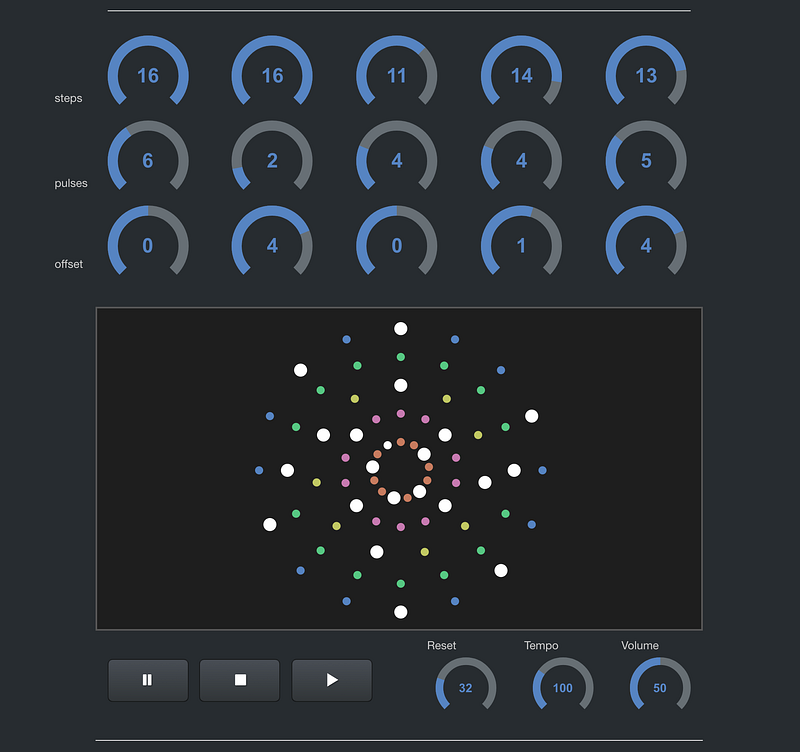
We touch on ideas like the “Euclidean Algorithm”/“maximally-even” rhythms, the idea of the “Goldilocks Zone,” and the concept of “Ecological Perception.” We ask aloud whether Thom Yorke’s opinion matters as it pertains to analysis and interpretation of Radiohead’s music. We wonder whether artists are trustworthy when they talk about their intentions. And it was quite the music nerd thrill.

What did you think about the interview? Would you be interested in seeing more content like this? Share your thoughts below!

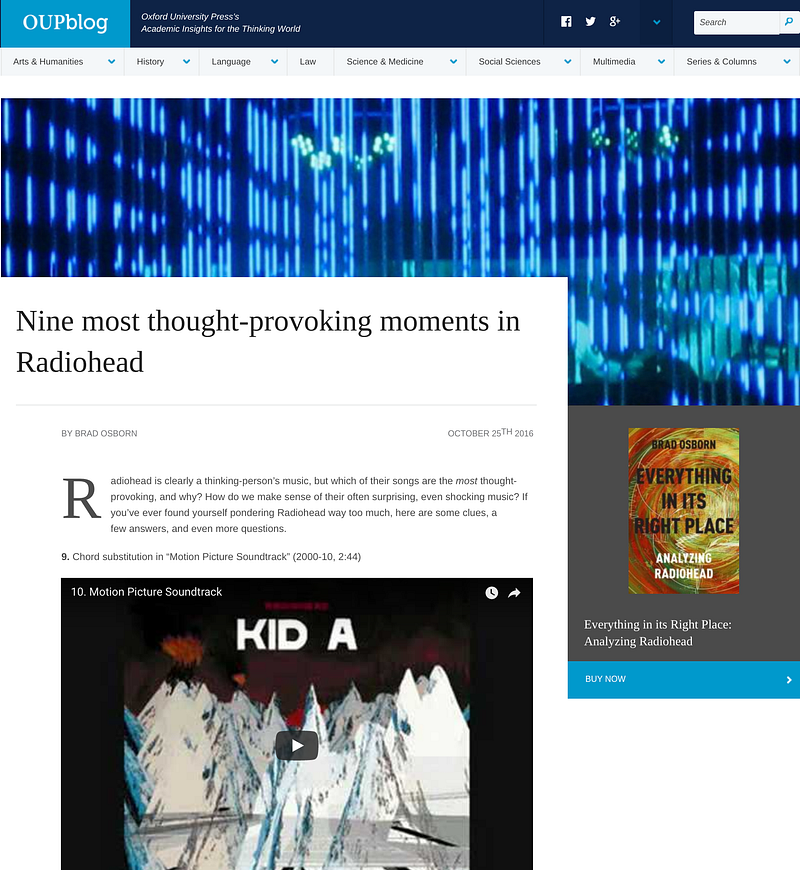
You can read the article Prof. Brad Osborn mentions in the interview below:

“Nine most thought-provoking moments in Radiohead

You can buy Brad’s book “Everything In Its Right Place: Analyzing Radiohead” at the OUP Store (no, he did not pay me to put this here, I just think it’s cool).

Everything In Its Right Place: Analyzing Radiohead

And finally, check out this cool little web app for quickly creating Euclidean-style rhythms and start making some maximally-even rhythms of your own now.

E-909 Elements Euclidean Rhythm Composer